Drawing with feedback
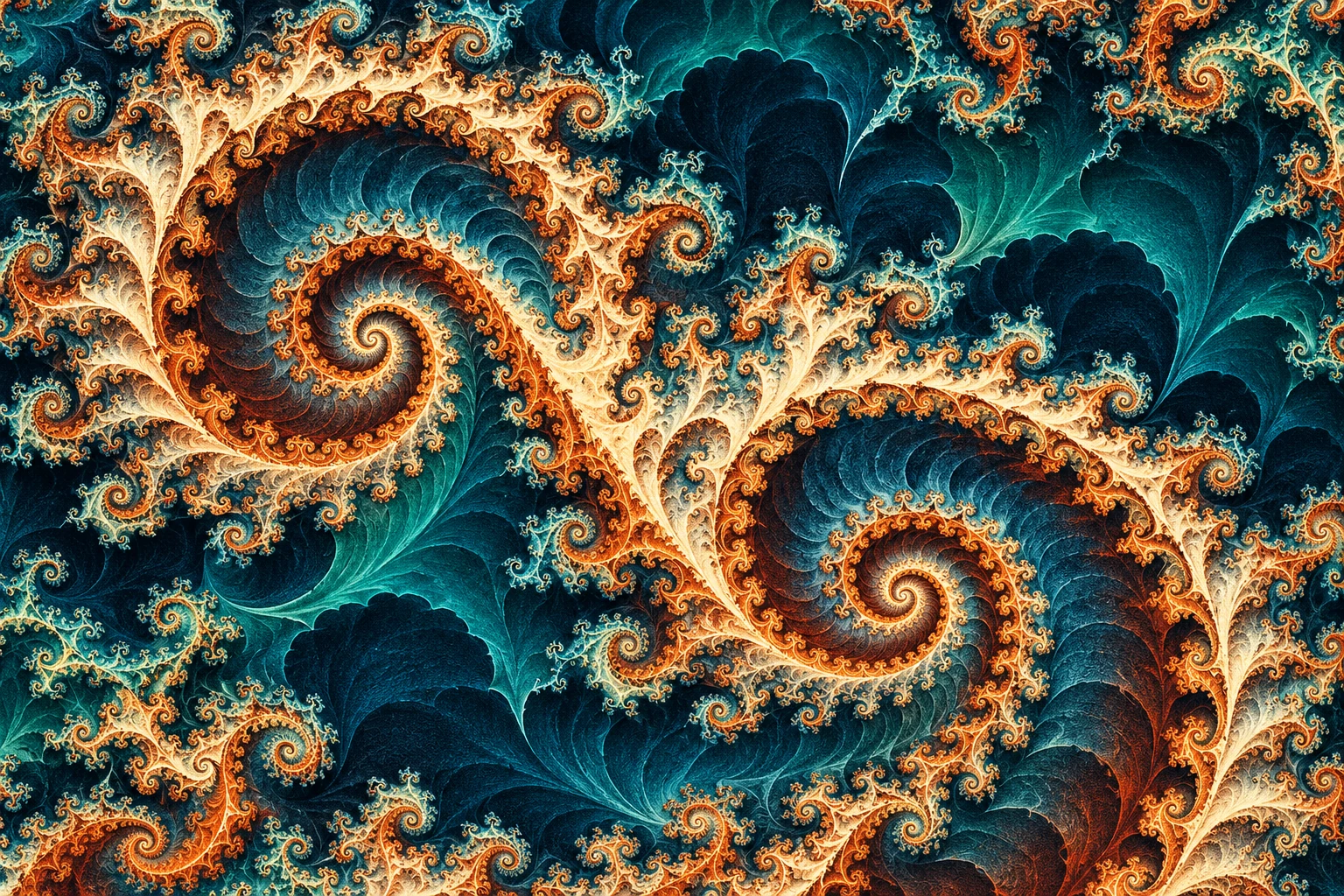
Chaos and Fractals: New Frontiers of Science by Heinz-Otto Peitgen, Hartmut Jürgens, and Dietmar Saupe inspired several of these experiments. In the multiple reduction copy machine, I used Direct3D textures to make smaller, transformed copies of an image and fed the result back in for the next pass.
Rendering on worker threads
I divided the complex-plane image into tiles that worker threads could calculate independently. I left midpoint displacement on one worker while experimenting with how to split the recursion, where each new segment depends on the endpoints set by its parent.
Other experiments
I tried grammar-driven drawings with L-systems and wrote a pixel shader that explores the logistic map’s period-doubling behavior.